The Mirror & The Weight Vest
Luxury, Struggle, and the Illusion of Progress
I was at a stoplight in Irvine - an excessively tidy planned community in coastal Southern California the other day and saw something that sparked deep reflection. I was at the corner of Jamboree and Michelson, the kind of clean corporate intersection lined with mirrored office buildings, landscaping crews, and Teslas waiting for the light to change. It was just a typical moment in a polished business district—until it wasn’t.
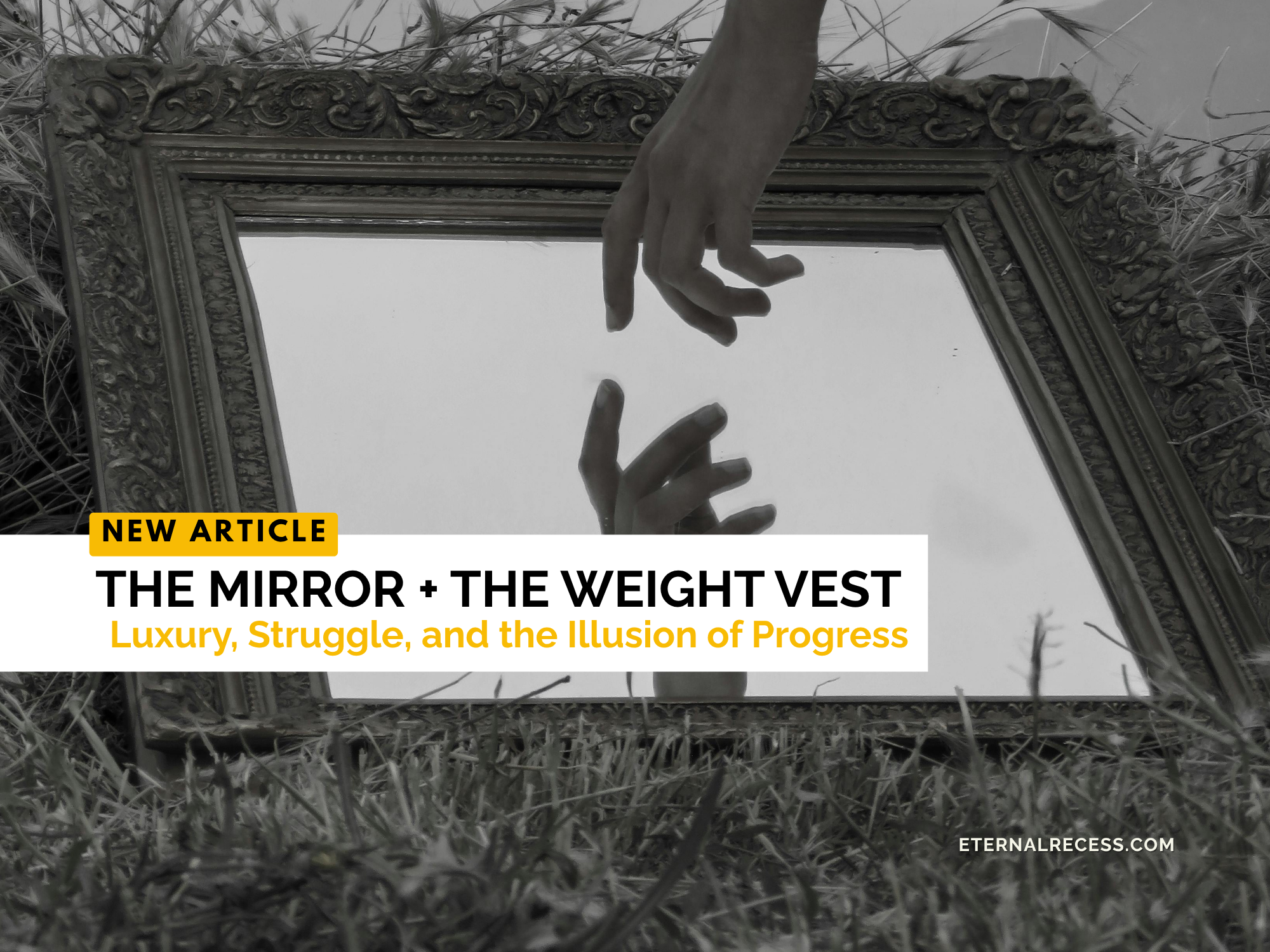
Out of the corner of my eye, I caught sight of a man crossing the street in front of me. He looked like he might be in his late 30s or early 40s, scruffy, sun-weathered, clothes a bit oversized and stained. He carried something flat in his hand, almost like a large cell phone being held on speakerphone. But as he got closer, I realized it was a mirror. He was looking directly into it, smiling, speaking aloud, and watching himself as if waiting for a response.
Then, from the other direction, another man entered the crosswalk. He was the same age—give or take a few years—but he looked like he’d just stepped out of a Lululemon ad. Fitted t-shirt, brand new running shoes, clean beard, Apple Watch, and a weighted vest strapped tightly across his chest.
And there they were, side by side for a brief moment. One man holding a mirror, entirely absorbed in himself. The other, wearing extra weight, moving with purpose and control. The juxtaposition hit me hard. Both were performing versions of the same thing—wrestling with identity, value, and meaning in a world that confuses them both.
When I saw the man with the mirror, I had an immediate thought: this is all of us.
We might not be talking to a literal mirror in public, but we’re glued to our screens doing the same thing every day. We’re scrolling, posting, reacting, waiting for a sign from the outside world that we’re enough. Did people like my post? Did I say the right thing? Do I seem smart? Attractive? Successful? We’re constantly looking for ourselves reflected back through other people’s approval.
And then there was the man in the weight vest. It was equally striking, but for a different reason. His life appeared comfortable—probably too comfortable. So much so that he had to add difficulty, purchase strain, and simulate burden in order to feel strong and alive. That, too, is us.
Somewhere along the line, we were taught that success looks like ease. That the goal is comfort, luxury, convenience. So we strive, we get the job, the salary, the car, the apartment, the robot vacuum, the meal delivery, the grocery apps, the remote job with Slack and Zoom and ergonomic chairs. And then, slowly and without realizing it, we begin to crave the exact things we worked so hard to avoid.
We miss physical effort, so we buy a gym membership. We long for community, so we join online groups. We want to feel something real, so we pay for coaching or therapy or adventure or struggle—or all of the above. We strap on metaphorical (or literal) weight vests because our lives have become so frictionless they feel flat. We walk on treadmills in temperature-controlled rooms because walking outdoors now seems inconvenient. We spend money simulating a version of life that our grandparents lived daily without trying.
It’s not that fitness or comfort or technology is wrong. It’s that we’ve created a loop we don’t question. We glorify ease, then miss what ease took from us. So we pay to get it back. And at every step of the way, the message is the same: you need to buy one more thing to get closer to happiness.
But what if the answer isn’t more? What if it’s now?
The truth is, you don’t need to go through the whole cycle to reach the lesson at the end. You don’t have to chase ease until you get bored, and then chase hardship until you burn out. You can opt out. You can decide to find joy in the everyday, right now.
You can take care of your body not to look like someone else or punish yourself, but because you enjoy the movement. You can cook your food, carry your groceries, walk to the store, talk to strangers, tend to your needs with pride instead of outsourcing everything to an app. You can stop looking outward for validation and start paying attention to the quiet satisfaction that comes from simply living with intention.
I’m not knocking the gym or the weight vest or DoorDash or comfort. They all serve a purpose, and for many people, they’re lifelines. But I am questioning the idea that chasing after “better” will finally make us feel good. That the only way to feel connected, strong, or worthy is to keep simulating a life that’s already right in front of us—if we’d just slow down and live it.
That moment at the stoplight reminded me of something I come back to often: all of this striving can keep you very busy and very distracted. But meaning and joy don’t require a system reboot. You don’t need to reinvent yourself through hardship or burn through your savings to simplify your life. You just have to be willing to stop performing, stop reacting, and choose to be here.