Türkiye - Day 11-14: The Ani Ruins
A Stunning Walk Through the City of 1,0001 Churches
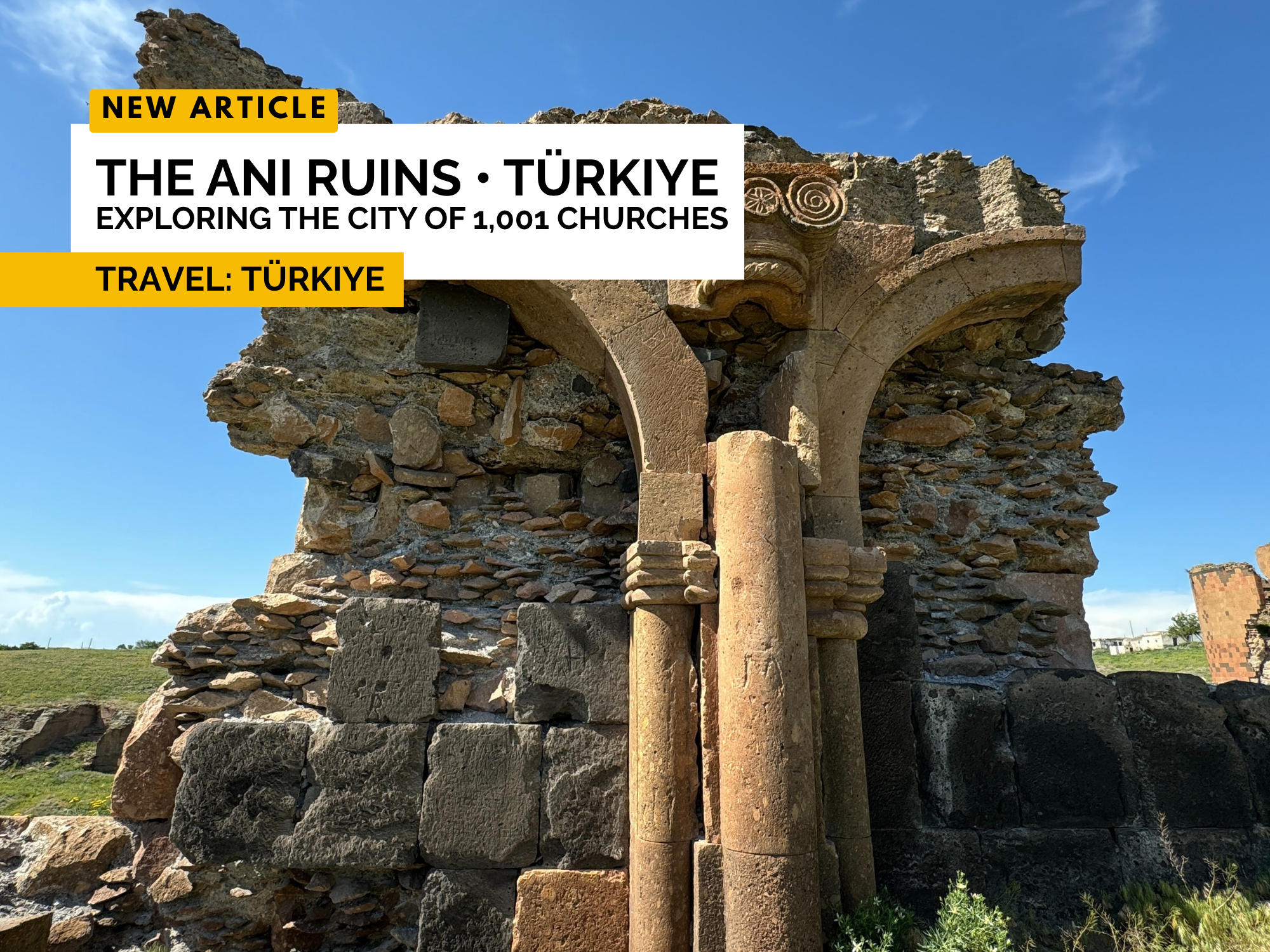
The road stretches out before us heading east, towards the Armenian border. Endless green fields and rolling hills fill the windshield. Mustard flowers zip past along with the occasional horse. We stop to switch drivers as I’m learning to drive a manual car and this is a good empty stretch. The flower fields are littered with shiny black rocks - obsidian! We pick them up and strike them against each other to watch the cut facets glint in the hot sun. The large amounts of obsidian in eastern Turkey are due to the region's volcanic history. Ani is located on the Armenian Plateau, which is geologically active and home to several extinct and dormant volcanoes, including Mount Ararat (home to possibly Noah’s Ark), Mount Aragats, and the lesser-known Nemrut and Tendürek volcanoes.
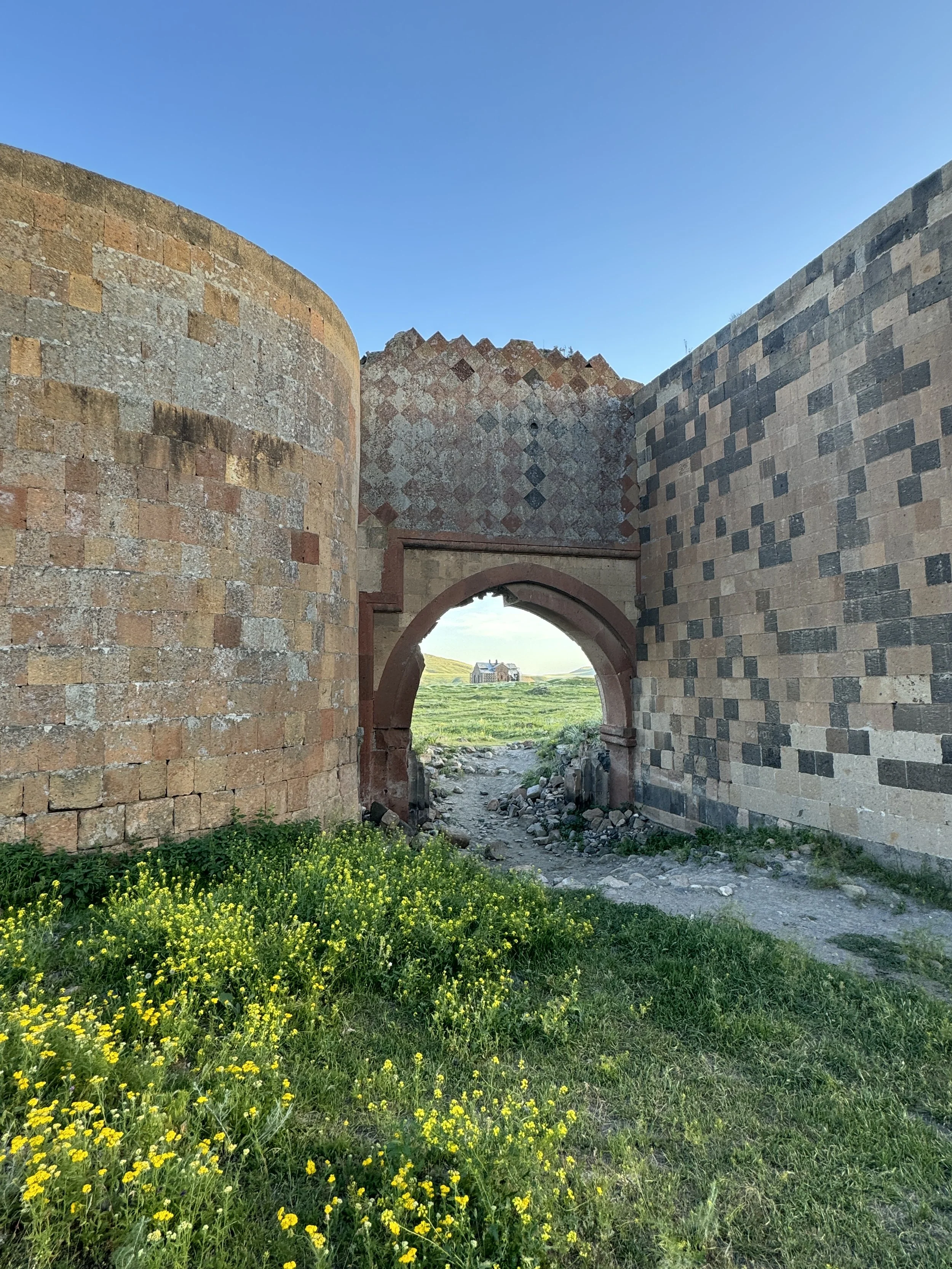
In the distance we can see a few tiny structures perched on hilltops, barely visible to the naked eye. We turn off the main road and head towards them. The Ani Ruins are one of the top places I picked for this Tour of Türkiye. Once a thriving medieval capital of the Bagratid Armenian Kingdom, Ani was known as the City of 1,001 Churches, a place of immense wealth, trade, and cultural brilliance. Today, its remnants—weathered cathedrals, crumbling city walls, and the skeletal remains of mosques and palaces—whisper stories of past grandeur. As I stepped through the ancient gates, the sheer scale and silence of Ani felt almost otherworldly, a haunting reminder of the passage of time.

Click images to expand
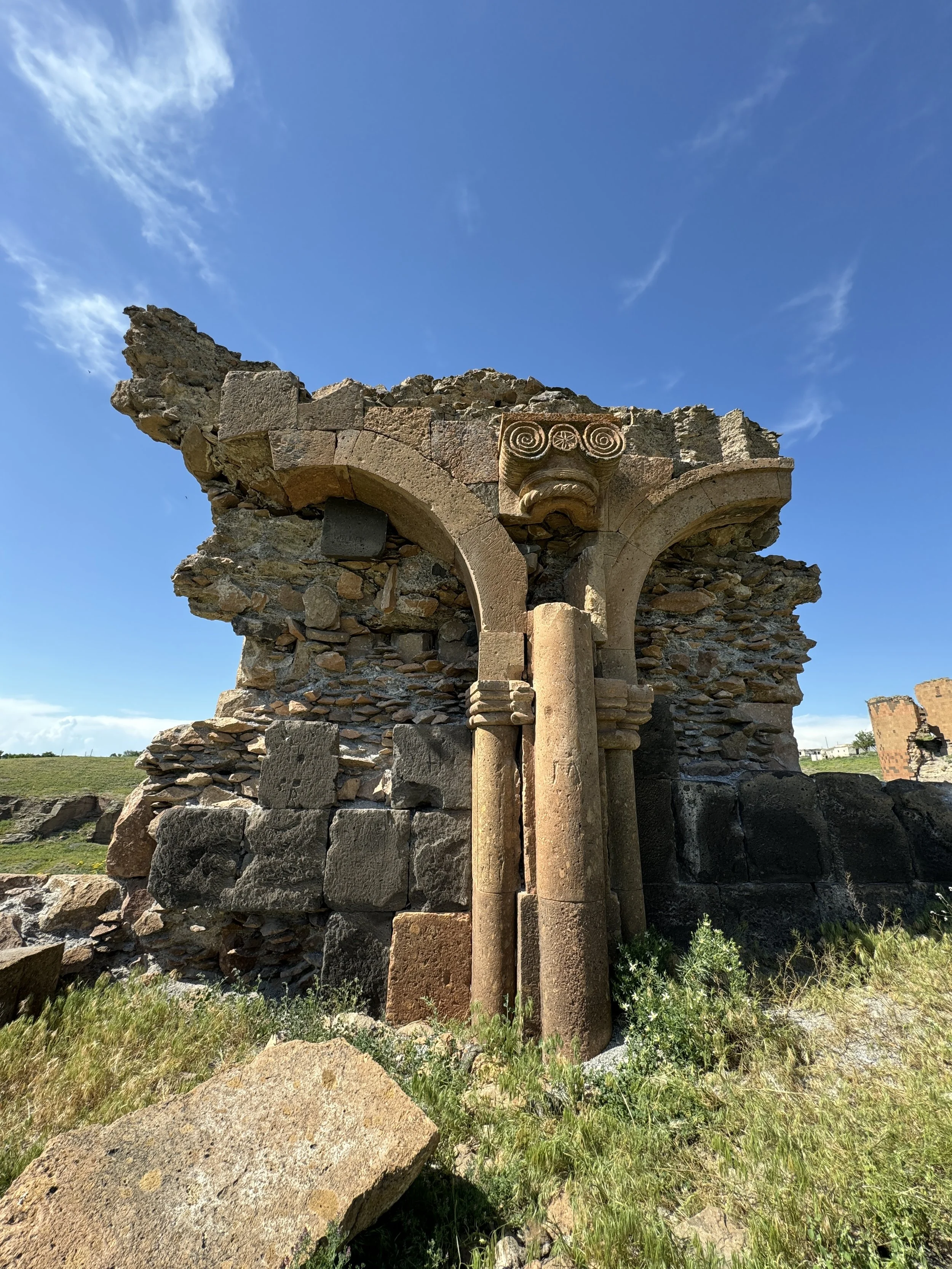
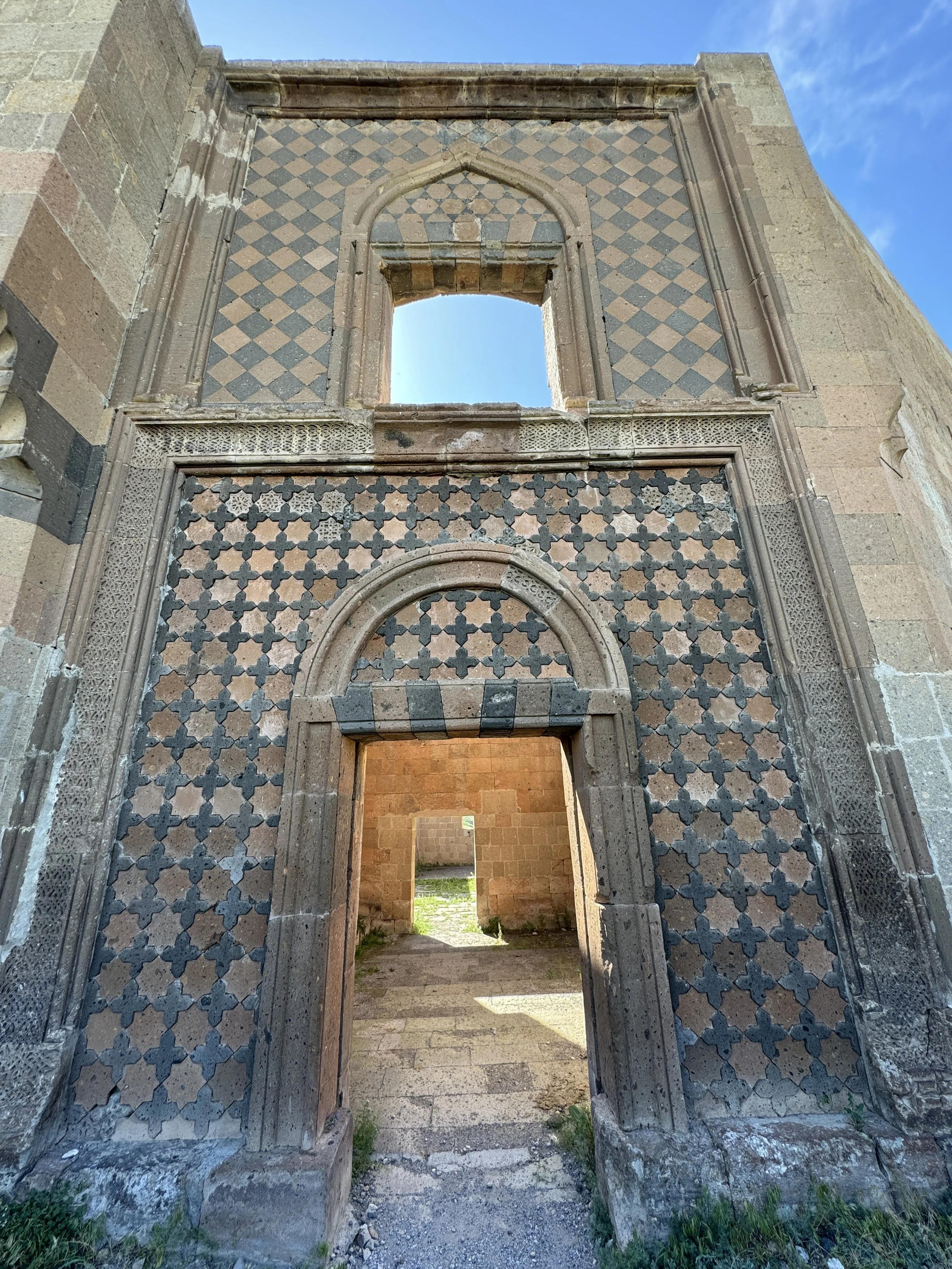
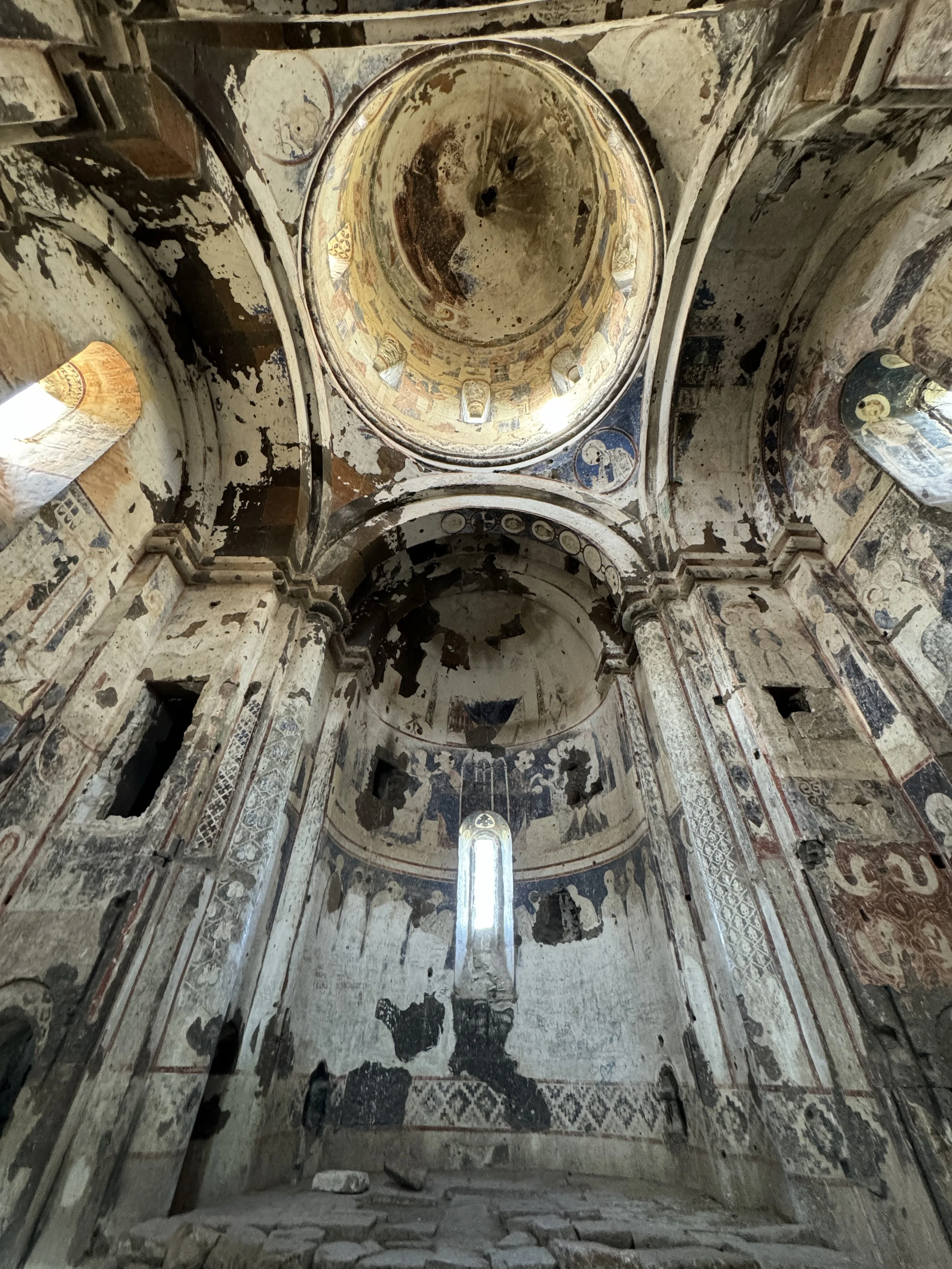
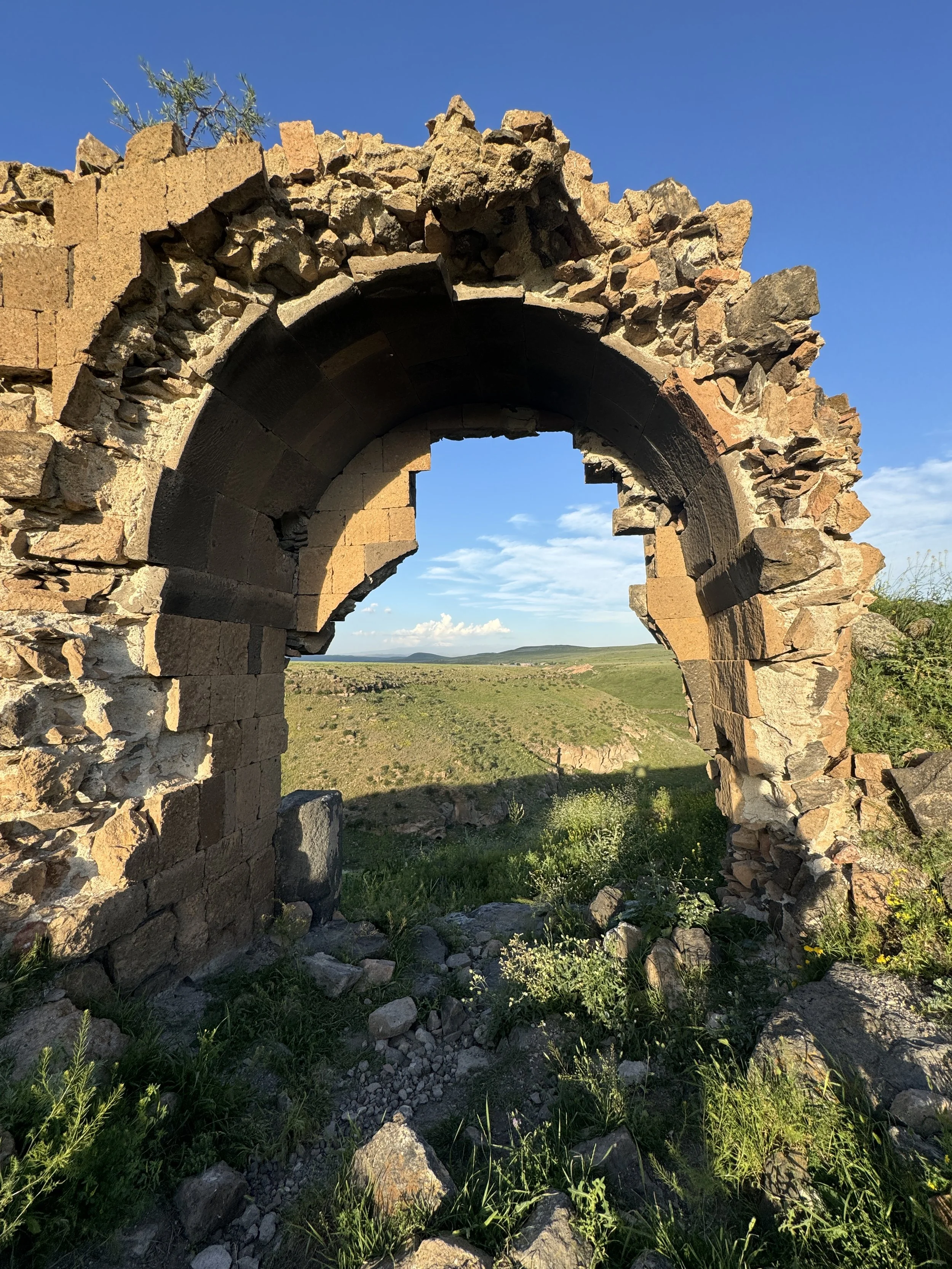
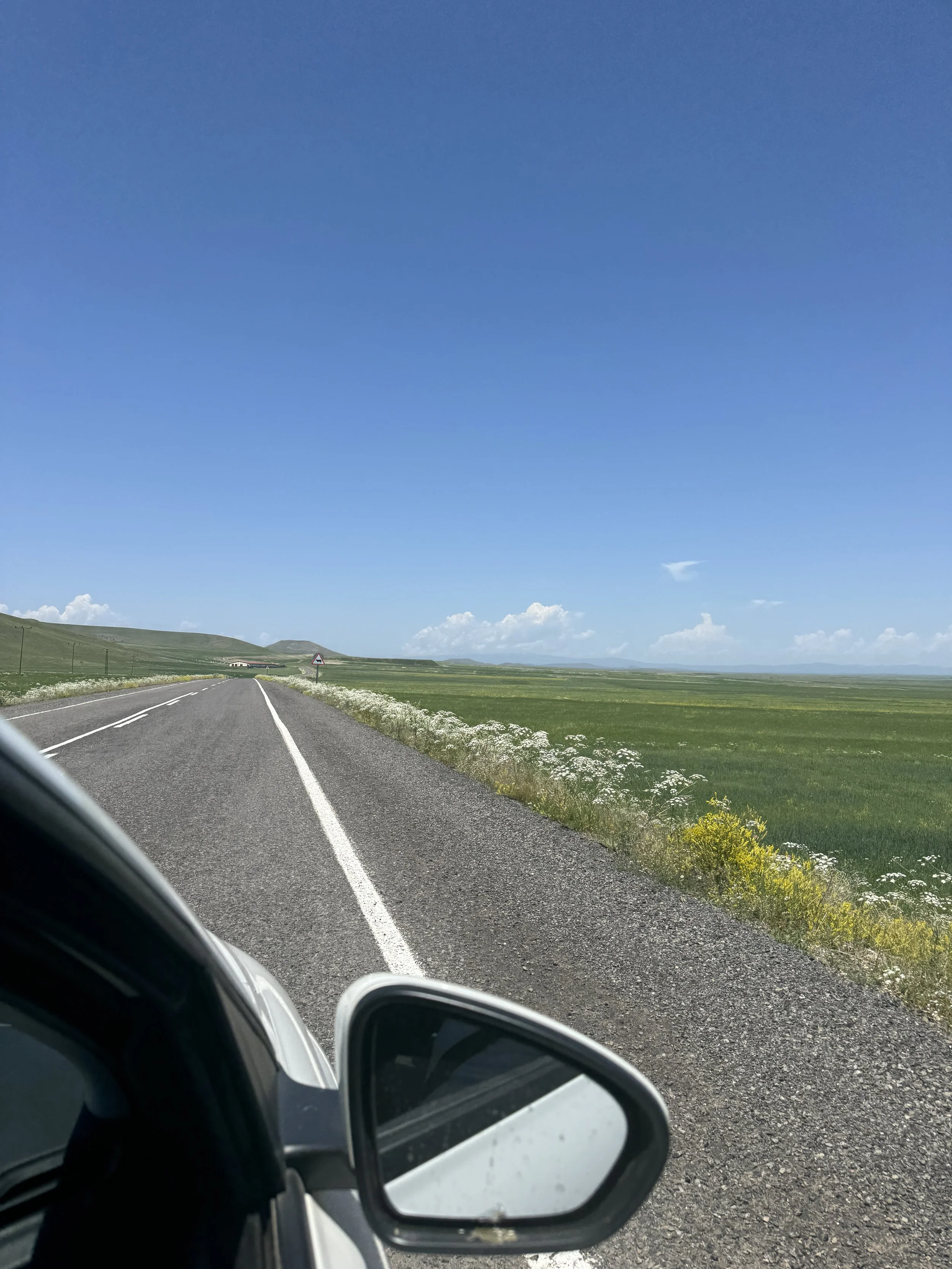
The site is extremely well organized and we headed to the first set of ruins on foot. The ancient walls tower above us and pigeons roost and coo in the alcoves. We marvel at the architecture, the scale of these dome-topped cathedrals and the sheer detail involved. We spot a trail heading out of the main path and, of course, decide to take a wander down that. We walk away from the main ruins and into a stunning valley. Lush and green, surrounded by massive rock gardens, with a river winding lazily through. Cowbells jangle in the breeze and we spot a herd grazing unhurriedly.
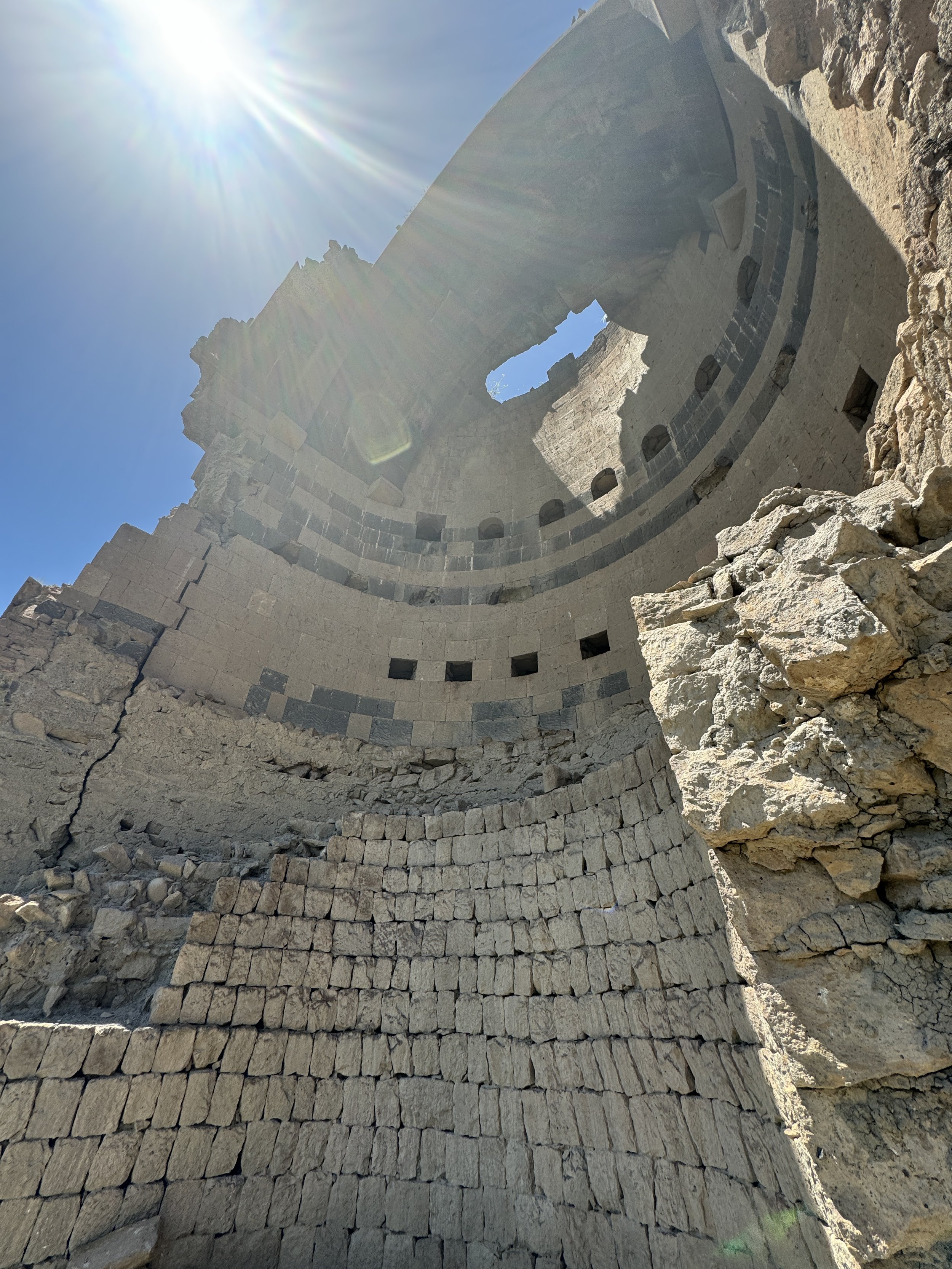
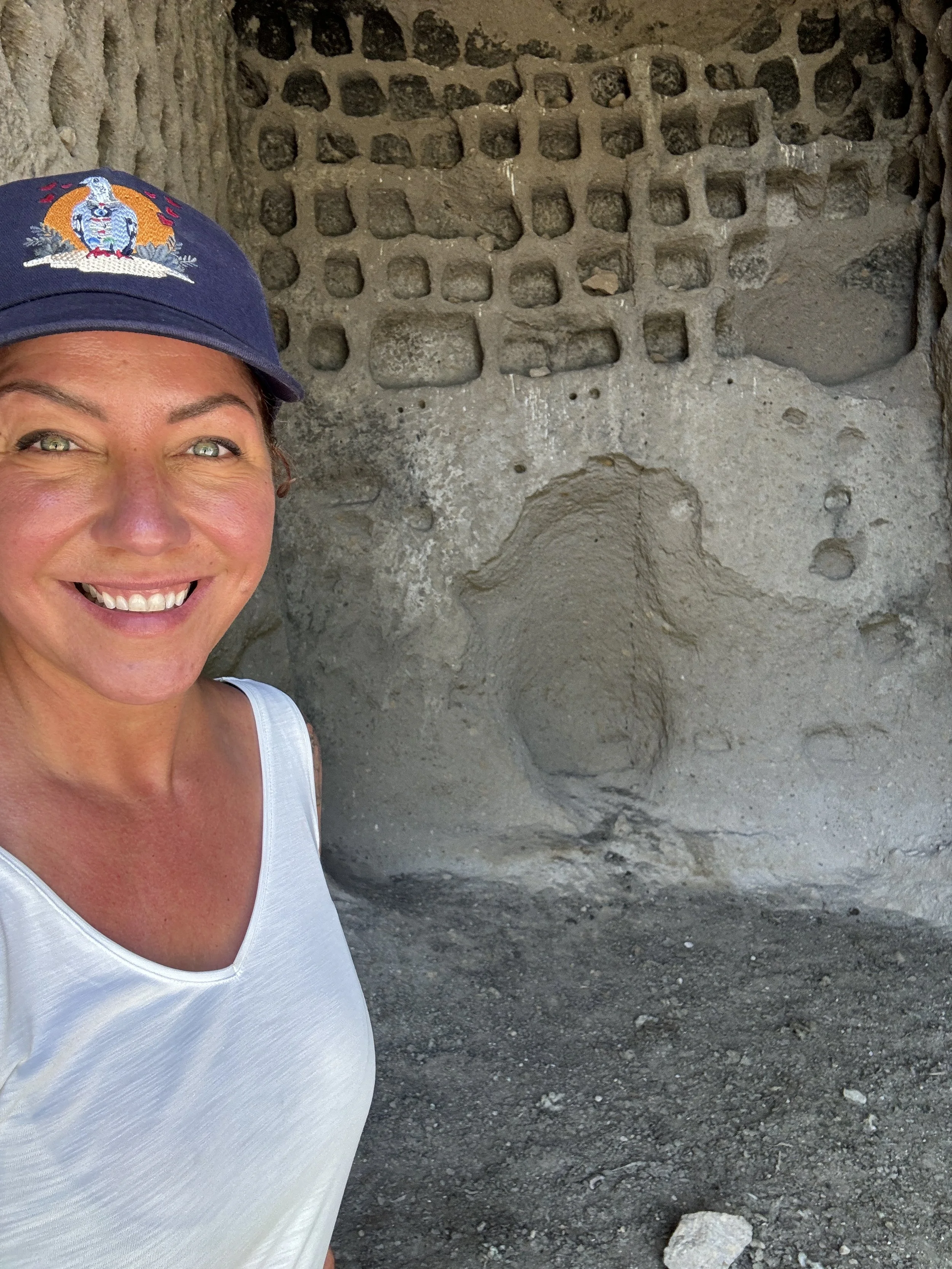
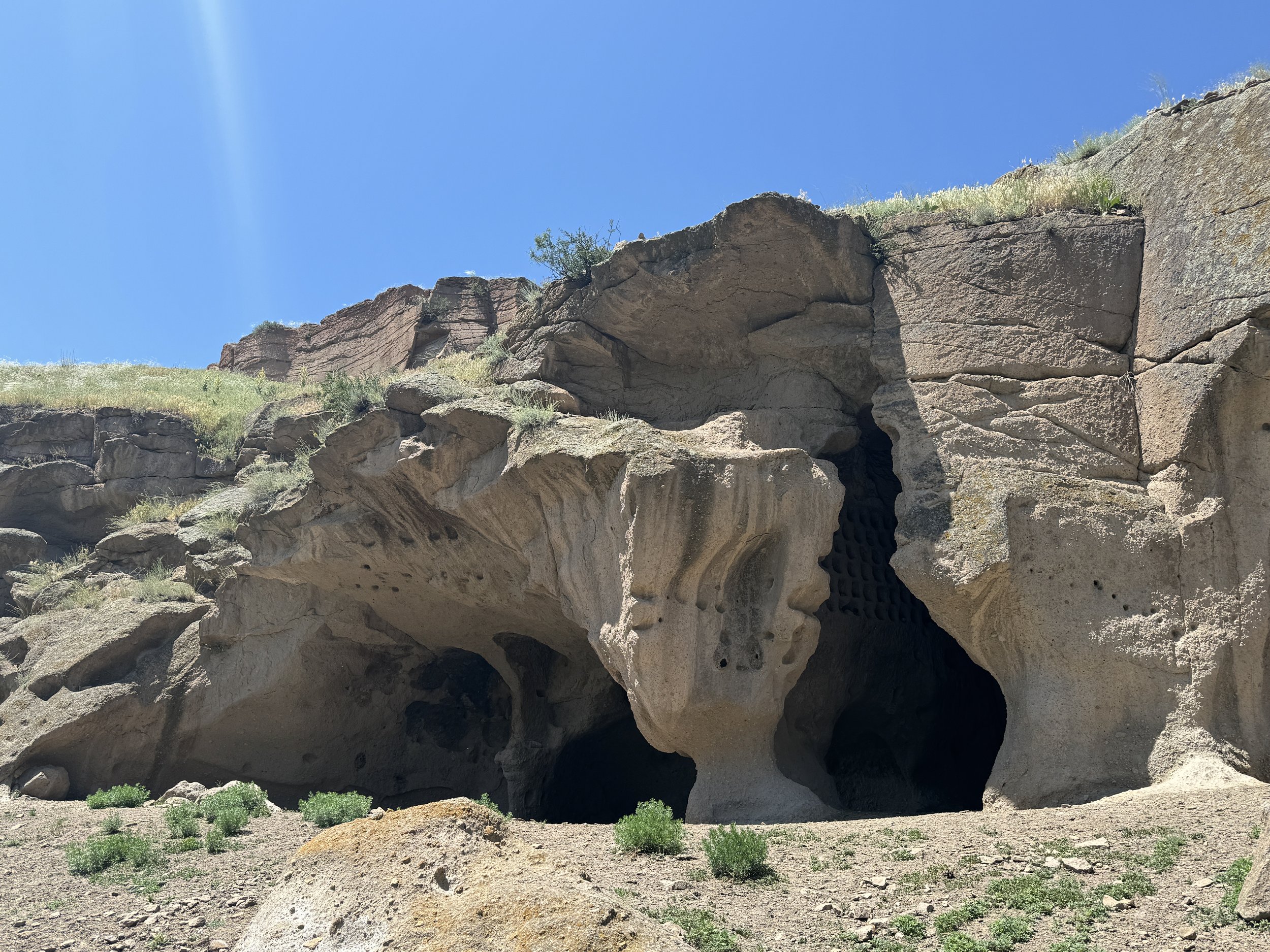
The valley unravels in sheer beauty. The scale and size are impossible to capture in a photograph. Every single rocky area is full of rock caves, homes and dovecotes. The rock caves of Ani predate the grand medieval churches and were among the earliest dwellings in the city. These caves, carved into the cliffs along the Akhurian River (Arpaçay River), were inhabited as early as the Bronze Age (3000–2000 BCE), long before Ani became a thriving medieval city. They likely served as homes, storage areas, monasteries, and possibly defensive shelters for early settlers. It’s like the ultimate 2-for-1 special! We walk deep into the valley and I wish we had at least 2-3 days to hike through this area and camp, exploring an unfathomable amount of rarely seen windows in time.

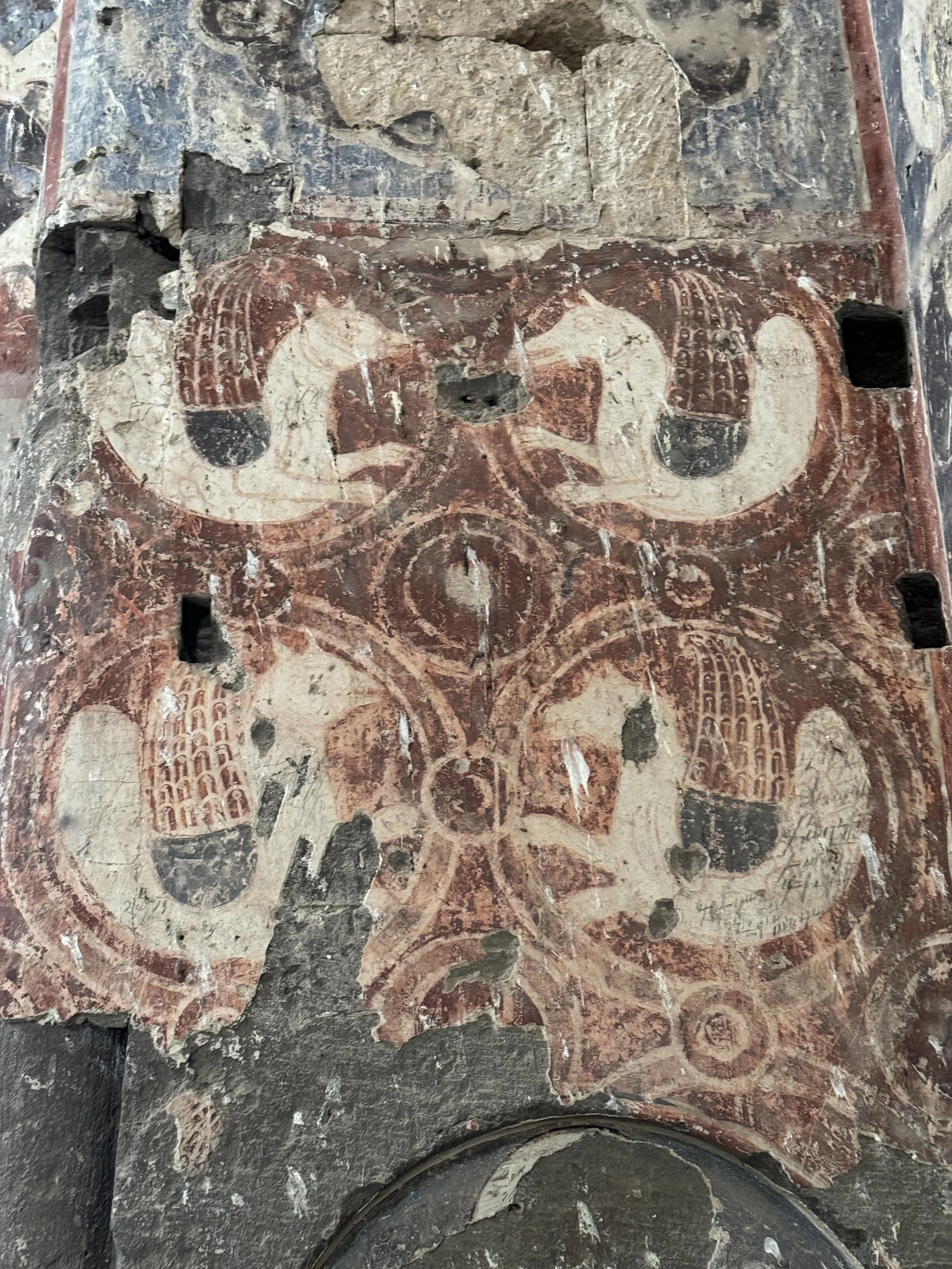
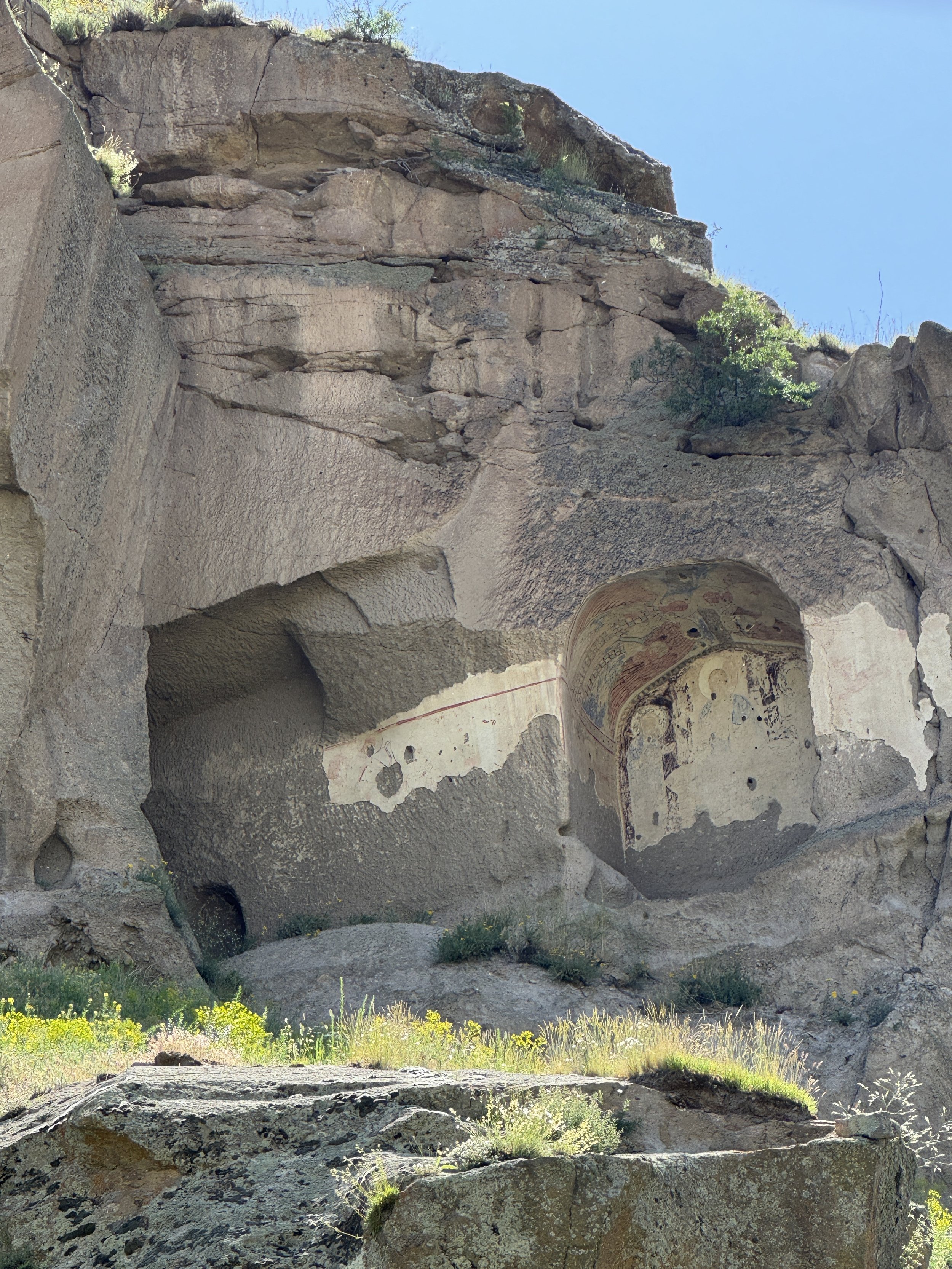
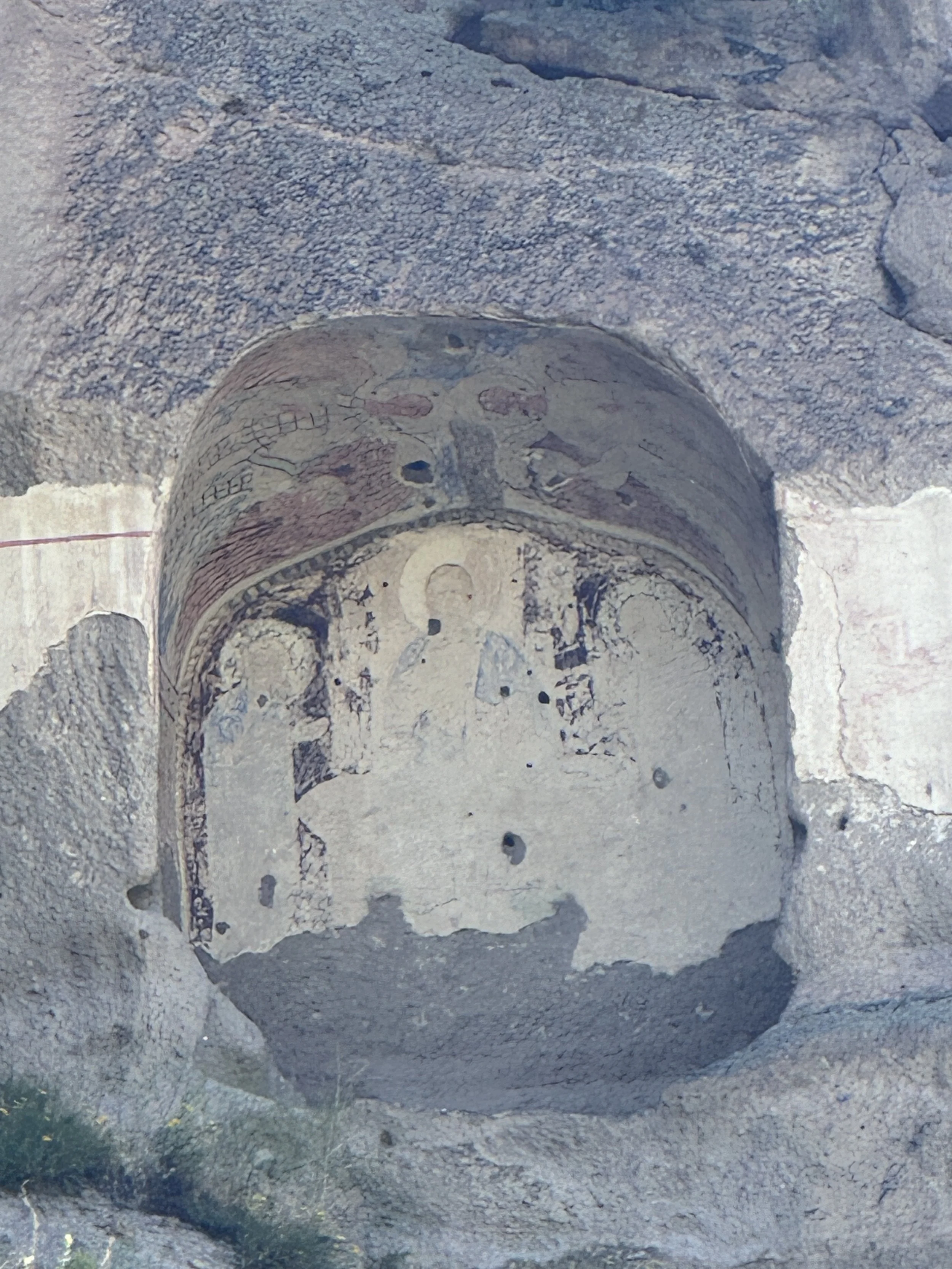
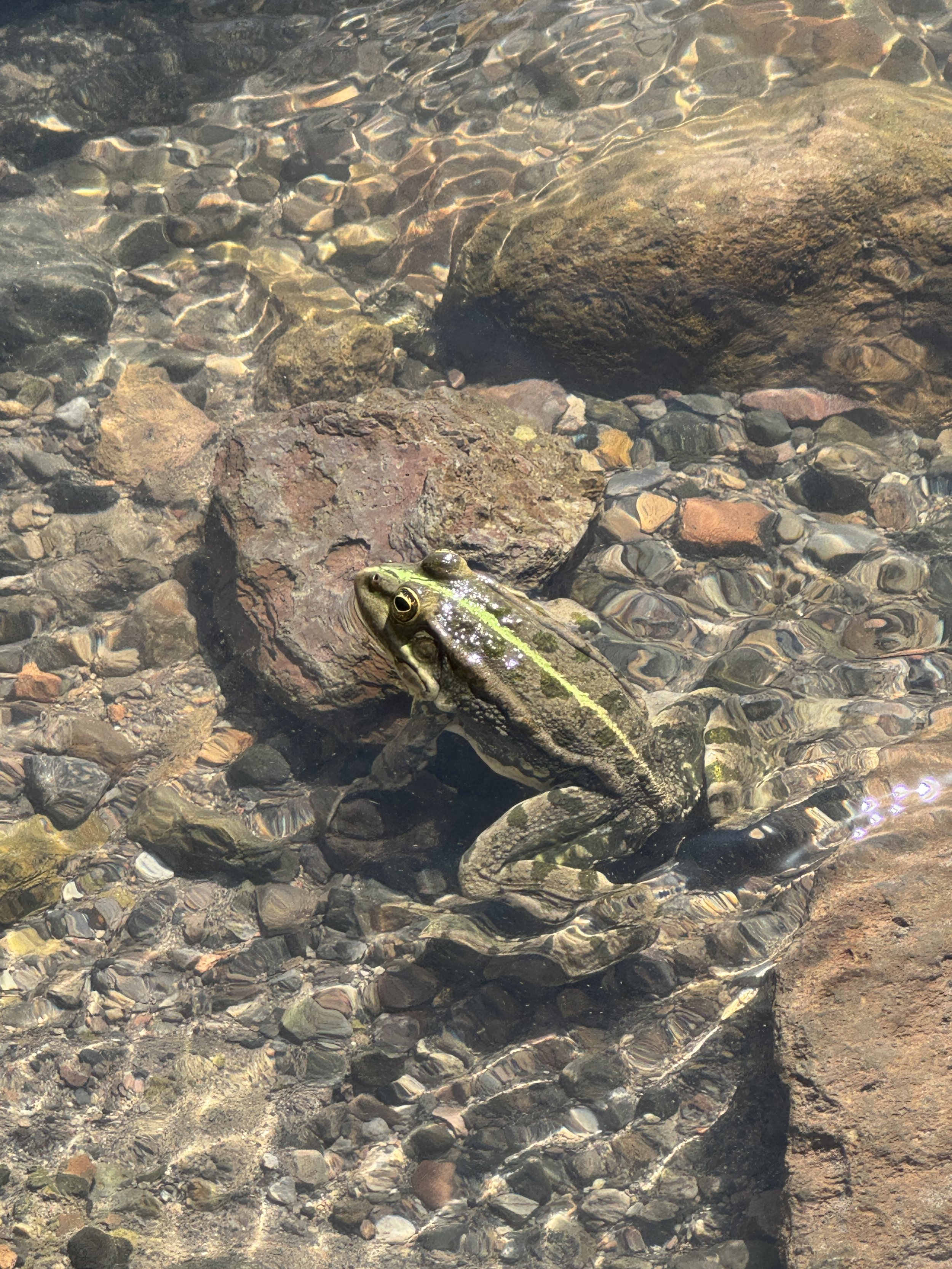
Z hikes way up to some caves and discovers a beautiful frescoe - the paint colors still visible after all this time. We love to wonder what their lives were like - each set of civilization that came through. Places like this make your own life feel like a tiny blip on the surface of the planet. We are right-sized in time, space and ego over and over again on this trip. I am simply one of many who have passed through these lands. The birds and the frogs and the cows must roll their eyes thinking, “Oh great, another silly two-legged idiot coming through these lands.” We watch a snake slide through the grass and into the river and time stands still.
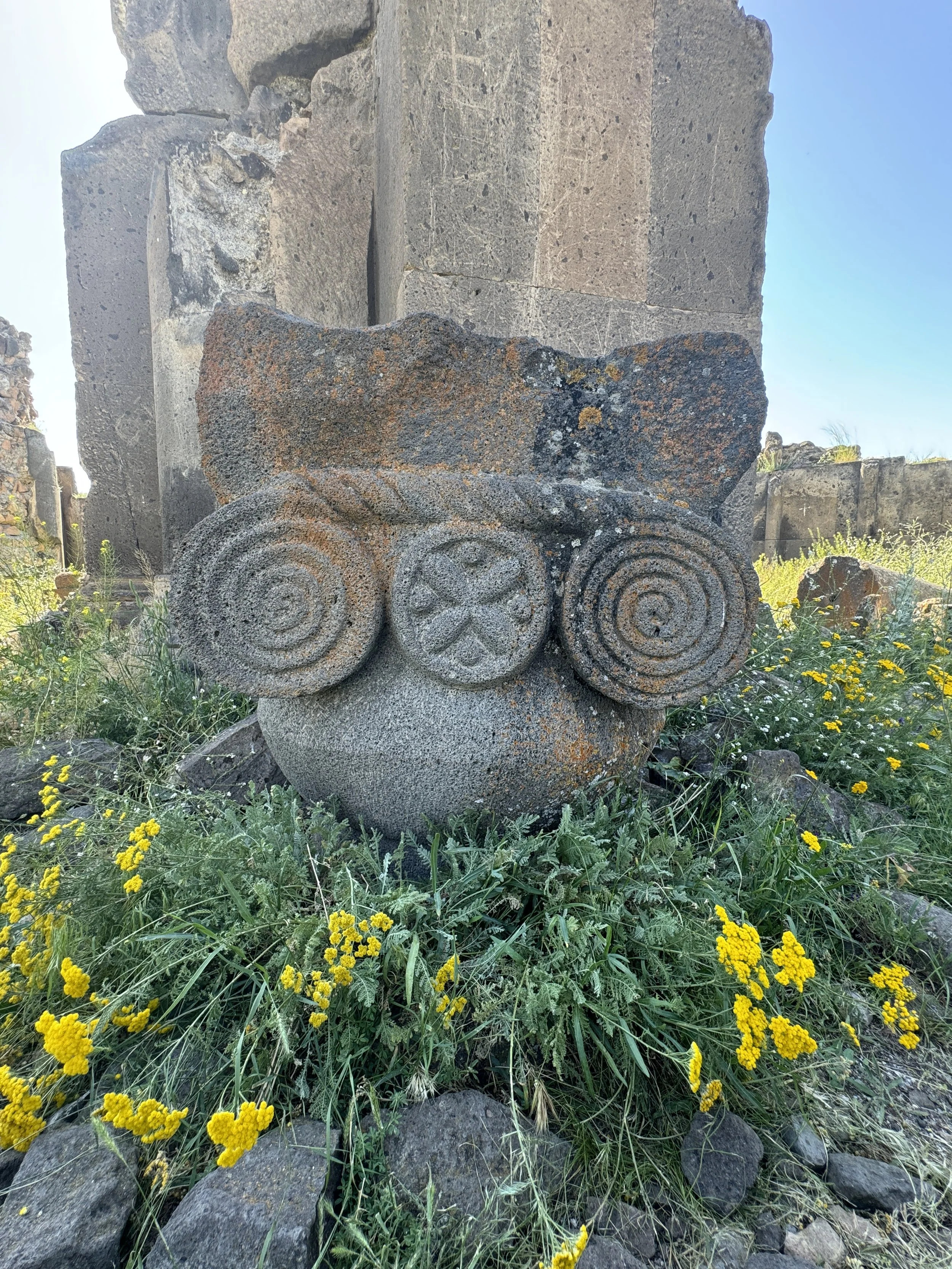
We walk back up towards the main area and continue to marvel. Each area is unique - a different shape, structure, perhaps a dome, arched corridors, winding staircases to dove-filled rafters. Every single square inch is decorated with ornate swirls, spirals, stars, frescoes - it seems they had an aversion to plain walls. I cannot imagine how majestic these churches must have been in their time.
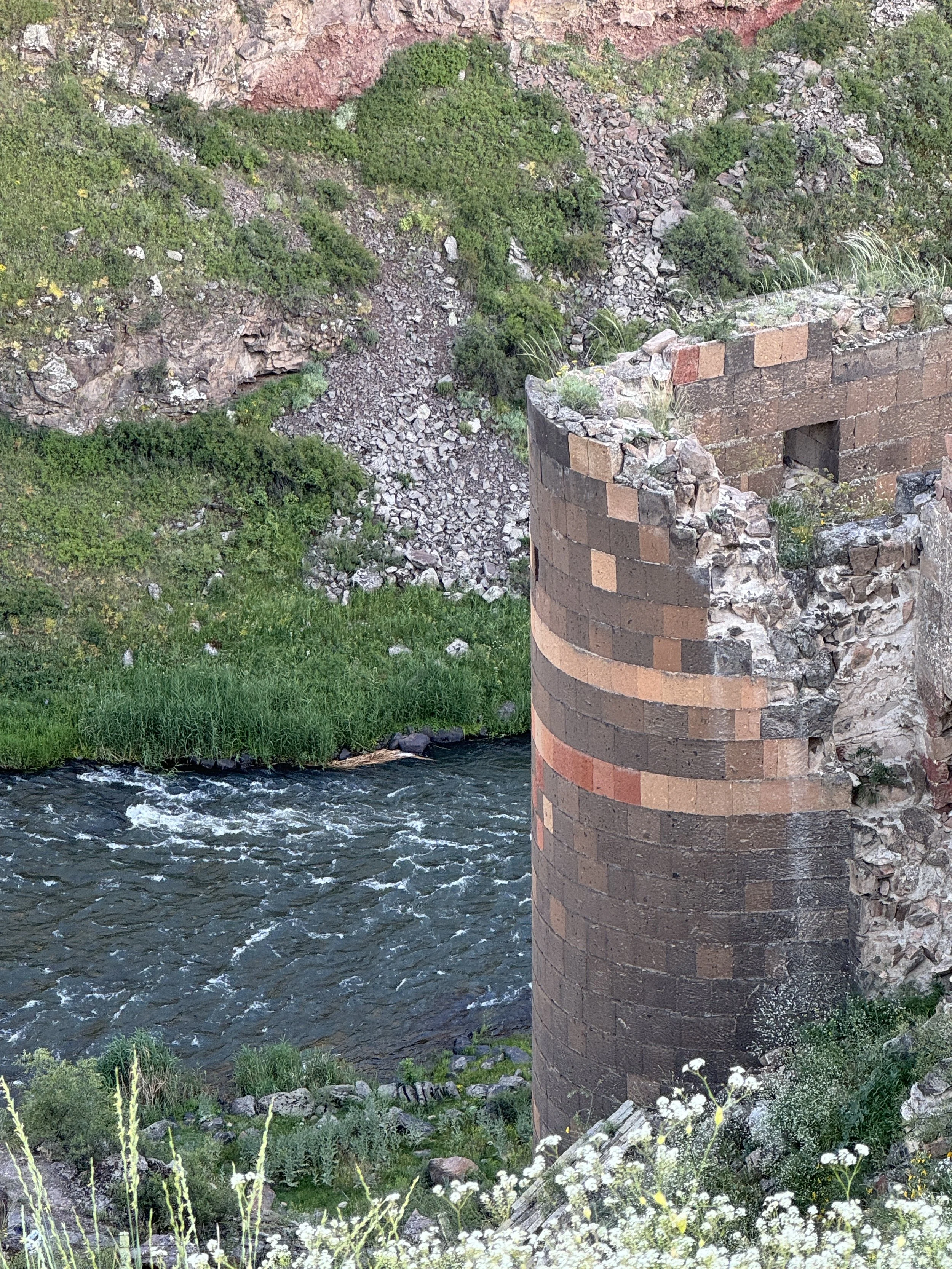
Ani rose to prominence under the Bagratid Armenian Kingdom, becoming its capital in 961 AD. By the 11th century, it was a thriving metropolis with a population estimated between 100,000 and 200,000 people. I can almost imagine that many people thriving and living in this gorgeous setting. The ruins of a medieval bridge (known as the Silk Road Bridge) span the Akhurian River just below Ani—and they are hauntingly beautiful. The broken bridge is a powerful symbol of lost connection—between cultures, between past and present, and between Armenia and Turkey.
As an American, history can feel distant and disconnected from who I am today. I realize as I stand on the hill top looking at the remnants of this bridge that, again, here it is not the case. With neighboring countries so close and centuries of history together - memory remains strong and full of emotion. It’s also extremely notable at how well-cared for this remote site is and how accessible. The fact that we could walk inside and around these stunning structures was mind-blowing. That level of access requires a more responsible tourist base, and the site was simply incredible.
This region is wonderful and I would absolutely recommend visiting the ruins and would happily return any day to capture these unique churches at different times of the day / lighting as well as explore the surrounding backcountry which has to be full of surprise discoveries!